























Getting a group together for game night just got a whole lot more interesting. Irish poker is one of those rare games that combines the thrill of card guessing with the social energy of a good party, and it doesn't require any prior poker knowledge to enjoy. Whether you're hosting a backyard hangout or a college pregame, this guide walks you through everything you need to know. Let's deal in.
Before the first card hits the table, you need about five minutes of prep. The beauty of this game is that the setup is dead simple — no chips, no complicated rules sheet, no dealer training required. Just a deck, some drinks, and a group of friends ready to have a good time.
Use a regular 52-card deck with no jokers. Shuffle thoroughly — seriously, don't skip this step, because a poorly shuffled deck can lead to weirdly predictable draws that kill the party atmosphere faster than a bad playlist. A standard Irish poker deck is all you need for up to six players comfortably.
Have your beverages ready before you start. Most groups go with beer, hard seltzers, or mixed drinks — something light enough that the penalty drinks stay fun rather than overwhelming. Non-alcoholic options like soda or sparkling water work just as well. The goal is social enjoyment, so play responsibly and know your limits from the start.
Each player receives exactly four cards, dealt face-down in a row. Nobody flips anything yet. Card distribution happens in one clean pass around the table — left to right, one card at a time, until everyone has their four. Keep the remaining deck in the center; you'll need it for the community board later.
This is where the Irish poker drinking game rules really come alive. Each of the four cards in your hand corresponds to a guessing stage, and every wrong guess costs you a drink. The stages build on each other, which means your earlier guesses directly affect how you approach the later ones. Think carefully — or just guess wildly and embrace the chaos.
Flip your first card and make your call before it turns over. Red or black — that's it. A 50/50 shot that somehow still manages to trip people up when everyone's watching. Get it wrong, and you take one penalty drink. Get it right, and you watch someone else squirm at the next stage.
Now compare your second card to the first. Will it be higher or lower in rank? If your first card was a 7, you're making a judgment call with no additional information. Aces can be played as high or low — agree on this as a group before the game starts to avoid arguments. A tie (matching ranks) typically means you drink regardless of your guess, which is the rule most groups use.
Your third Irish poker drinking game card gets compared to the range created by your first two. Outside or inside — will the value fall between your two existing cards, or outside that range? If your first two cards were a 4 and a Jack, that's a wide spread and "inside" is statistically safer. Narrow spreads favor "outside." This is where a little card sense actually starts to matter.
The final stage is suit prediction, and it's brutal. Four options — hearts, diamonds, clubs, or spades — give you only a 25% chance of being right. Most groups make this the biggest penalty: get it wrong and take two drinks instead of one. Get it right and you earn bragging rights for the rest of the night. Some groups let the winner assign a drink to anyone at the table.
💡Keep a mental note of suits that have already appeared in other players' hands. It won't guarantee anything, but it slightly tilts the odds in your favor during suit prediction.
Once everyone has guessed through all four stages, the actual poker portion of the Irish poker online drinking game kicks in. This is where the card game shifts from pure guessing into something closer to a real hand of poker — with community cards, hand rankings, and a final loser who pays the price.
The dealer flips community cards in standard poker order: three cards for the flop, one for the turn, one for the river. These five cards sit in the middle and are shared by every player at the table. This part plays out just like Texas Hold'em, so if your group already knows that game, the transition is instant.
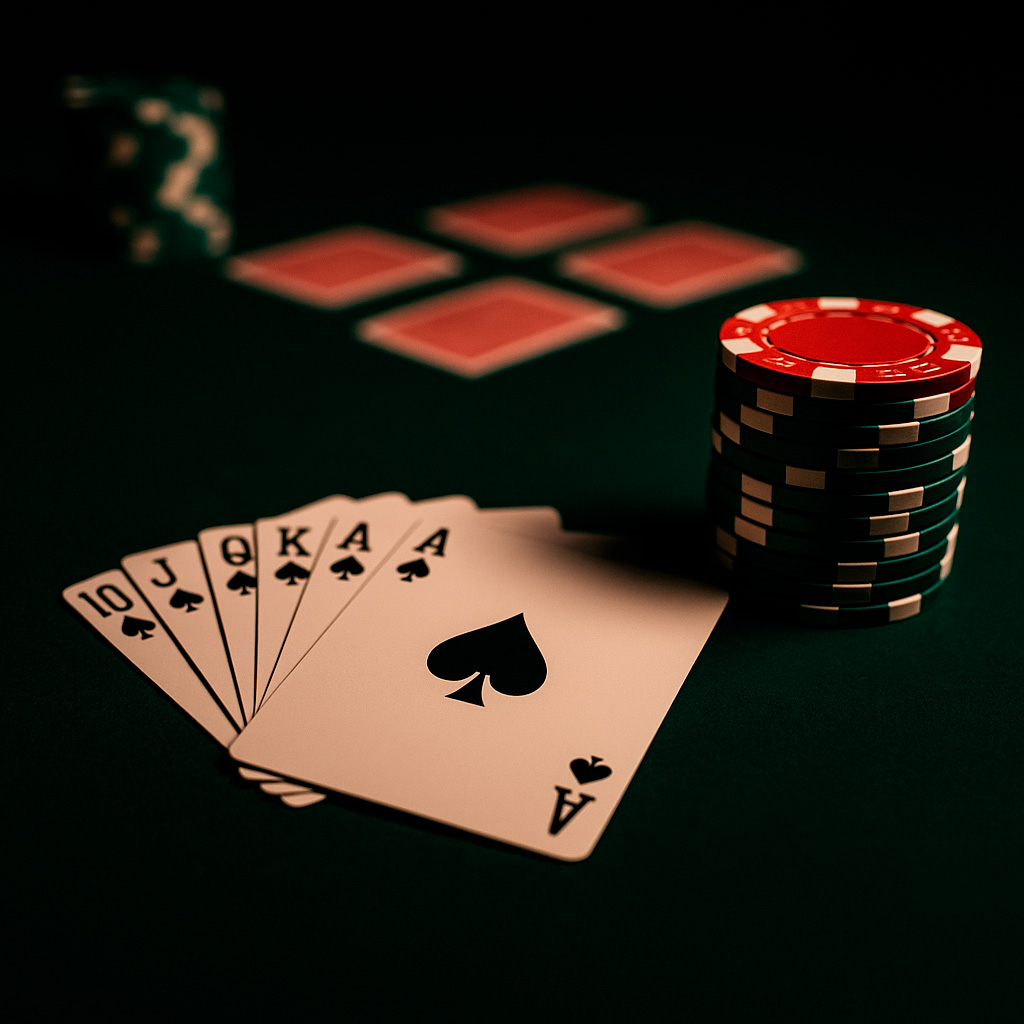
Each player combines their four hole cards with the five community cards to build the strongest possible five-card hand. Standard poker hand rankings apply — royal flush at the top, high card at the bottom. The key difference from regular poker is that you have four personal cards instead of two, which gives you more flexibility in building your hand.
|
🃏 Hand rank |
💪 Strength |
🎯 Frequency |
|
🏆 Royal flush |
Unbeatable |
Extremely rare |
|
🔥 Straight flush |
Near-unbeatable |
Very rare |
|
💎 Four of a kind |
Dominant |
Rare |
|
🃏 Full house |
Very strong |
Uncommon |
|
♠ Flush |
Strong |
Occasional |
|
➡️ Straight |
Solid |
Moderate |
|
🎲 Three of a kind |
Decent |
Common |
|
🔁 Two pair |
Weak-moderate |
Very common |
|
➕ One pair |
Weak |
Most common |
|
📉 High card |
Worst |
Baseline |
The player with the worst hand at showdown drinks. Simple as that. If someone folded during the guessing stages, they're typically considered automatic losers for the round and drink regardless of what the community cards showed. Some groups add a "give drinks" rule where the winner distributes sips to other players — this keeps the betting rounds feeling meaningful even without real money on the table.
Use this table to track how many drinks each mistake costs across the full game. It keeps things consistent and stops arguments mid-party.
|
❌ Mistake |
🍺 Drinks |
📋 Notes |
|
❓ Wrong red/black guess |
1 drink |
Stage 1 |
|
📊 Wrong higher/lower guess |
1 drink |
Stage 2 |
|
🔢 Tie in stage 2 |
1 drink |
Auto-penalty |
|
📐 Wrong inside/outside guess |
1 drink |
Stage 3 |
|
♠ Wrong suit guess |
2 drinks |
Stage 4 |
|
🃏 Worst hand at showdown |
2–3 drinks |
Group decides |
|
🚫 Folding before showdown |
2 drinks |
Auto-loss |
|
🏆 Winner's bonus |
Assign 2 drinks |
Optional rule |
The social drinking game format is designed to be entertaining, not excessive. At Shazam Casino, responsible play is a core value — whether you're at the virtual table or dealing cards at home. Fun has a ceiling, and it's important to recognize when the game is still serving everyone at the table well.
Set a personal drink limit before the game starts and stick to it. Designate a sober player to track the pace if the group tends to get competitive. Nobody should feel pressured to keep up — the whole point of Irish poker rules drinking game is laughs and connection, not a race to the bottom.
Swap drinks for points, tokens, or dare cards. Non-alcoholic players can use juice, soda, or water and still participate fully in every stage. Some groups assign push-ups or trivia questions instead of drinks — this makes how to play drinking game Irish poker accessible to everyone, regardless of whether they drink at all.