























Mastering poker hand rankings separates players who win pots from those who lose them on a misread. Every combination has a fixed position in the card hierarchy, and that order never changes regardless of stakes or format. This guide covers all ten hands, the math behind their rank, kicker rules, and common myths — everything needed to settle any table dispute instantly. Players at Shazam Casino will recognize these combinations automatically, but understanding the logic behind them sharpens every decision.
Ten categories define the complete poker hands order, each beating everything ranked below it. The most confusion happens in the middle tier — Full House vs. Flush, Straight vs. Three of a Kind — so those boundaries deserve close attention.
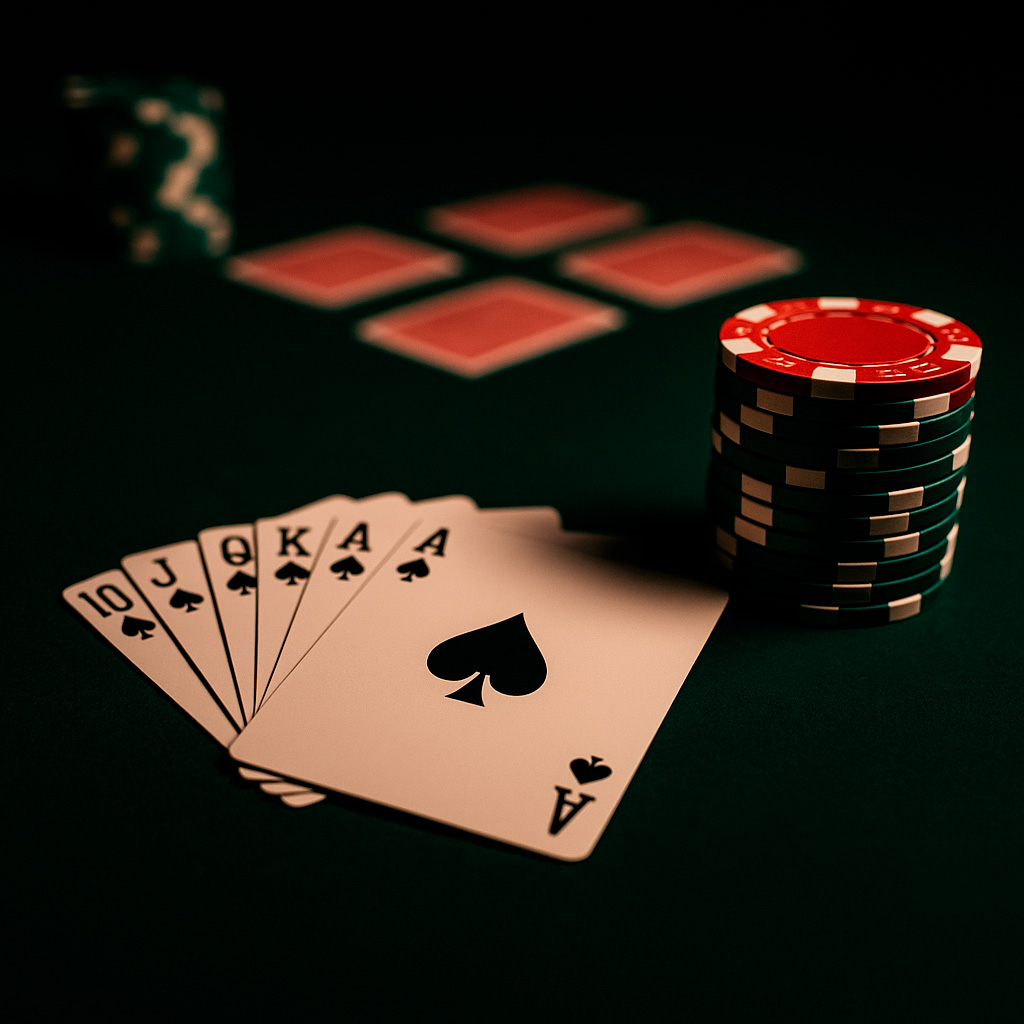
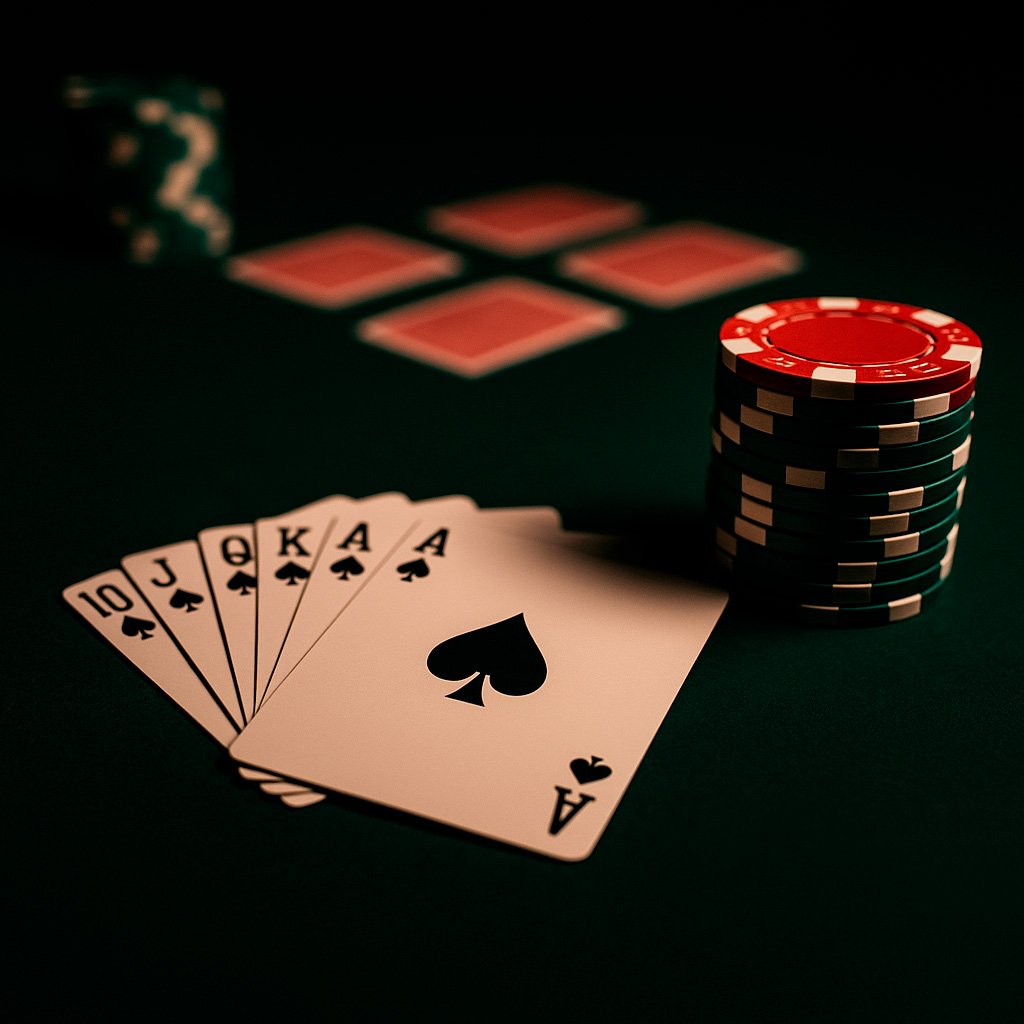
The best hand in poker is A♠ K♠ Q♠ J♠ 10♠ — five same-suit cards from Ten to Ace. Nothing beats it. A tie requires another player to hold the identical sequence in a different suit, which is addressed in the FAQ below.
A straight flush covers any five consecutive same-suit cards outside the Royal sequence (e.g., 6♥ 7♥ 8♥ 9♥ 10♥). Four of a kind sits just below — four matching ranks plus any fifth card. Both are rare enough that encountering either in a session is genuinely notable.
A full poker hand rankings house (three of one rank + two of another) outranks a flush (five same-suit cards). Beginners often flip these because "matching suit" feels powerful, but a flush is simply more common — so it ranks lower. The correct sequence: Full House → Flush → Straight.
Below the Straight sits Three of a Kind, then Two Pair, One Pair, and finally High Card — no combination at all. These hands card dominate the majority of dealt rounds. One Pair already beats High Card, a fact that prevents a lot of early folds.
|
🏆 Rank |
🃏 Name |
📋 Example |
⚔️ Beats |
📊 Probability |
|
1 |
👑 Royal Flush |
A♠ K♠ Q♠ J♠ 10♠ |
Everything |
0.000154% |
|
2 |
🔥 Straight Flush |
7♥ 8♥ 9♥ 10♥ J♥ |
Ranks 3–10 |
0.00139% |
|
3 |
💣 Four of a Kind |
K♠ K♥ K♦ K♣ 3♠ |
Ranks 4–10 |
0.0240% |
|
4 |
🏠 Full House |
Q♣ Q♦ Q♥ 4♠ 4♦ |
Ranks 5–10 |
0.1441% |
|
5 |
♦️ Flush |
A♦ J♦ 9♦ 6♦ 2♦ |
Ranks 6–10 |
0.1965% |
|
6 |
➡️ Straight |
5♣ 6♦ 7♥ 8♠ 9♦ |
Ranks 7–10 |
0.3925% |
|
7 |
3️⃣ Three of a Kind |
8♠ 8♦ 8♣ K♥ 3♠ |
Ranks 8–10 |
2.1128% |
|
8 |
2️⃣ Two Pair |
A♠ A♦ 7♥ 7♣ K♠ |
High Card + One Pair |
4.7539% |
|
9 |
1️⃣ One Pair |
J♠ J♦ 9♣ 5♥ 2♠ |
High Card |
42.2569% |
|
10 |
🃏 High Card |
A♠ K♦ 9♣ 6♥ 2♠ |
Nothing |
50.1177% |
Poker combinations are ordered by how rarely they occur — not by convention. The harder a hand is to make, the higher it sits in the ranking.
A 52-card deck yields exactly 2,598,960 unique five-card hands. Every probability in poker traces back to that number. Rarer hands earn higher ranks because the deck itself produces them less frequently.
Only 4 Royal Flushes exist across the entire deck — one per suit — giving a 1-in-649,740 probability on a single five-card deal. A straight flush has 36 possible versions, still vanishingly rare. These figures explain why both hands functionally end any pot the moment they're revealed.
Over 1 million distinct One Pair combinations exist in a standard deck, making it the most frequent outcome by a wide margin. Good poker hands like a Full House or better appear in fewer than 0.3% of deals combined — which is exactly why they command the pot when they land.
|
🃏 Hand |
🔢 Combos |
🎲 Odds (1 in…) |
📉 Probability |
|
👑 Royal Flush |
4 |
649,740 |
0.000154% |
|
🔥 Straight Flush |
36 |
72,193 |
0.00139% |
|
💣 Four of a Kind |
624 |
4,165 |
0.0240% |
|
🏠 Full House |
3,744 |
694 |
0.1441% |
|
♦️ Flush |
5,108 |
509 |
0.1965% |
|
➡️ Straight |
10,200 |
255 |
0.3925% |
|
3️⃣ Three of a Kind |
54,912 |
47 |
2.1128% |
|
2️⃣ Two Pair |
123,552 |
21 |
4.7539% |
|
1️⃣ One Pair |
1,098,240 |
2.4 |
42.2569% |
|
🃏 High Card |
1,302,540 |
2 |
50.1177% |
Identical hand types don't automatically split the pot. In most cases, a single card — the kicker card — resolves the outcome and directs the entire pot to one player.
When two players hold the same pair, the tie-breaker shifts to the highest unpaired card each holds. Player A with A♠ A♦ K♣ 7♥ 3♠ beats Player B holding A♥ A♣ Q♦ 7♦ 3♦ because K outranks Q. That deciding card is the kicker.
💡 Unsure whether your kicker plays? Let the showdown resolve it — online platforms never miscalculate kicker logic.
Comparison always moves from highest card downward, stopping the moment a difference appears. This sequential process governs poker cards ranking in any all-high situation and is frequently misunderstood in home games.
If the five community cards form the best possible hand for all remaining players and no hole card improves it, the pot divides equally. This outcome is more common in low-stakes games where hole cards often don't contribute to the final five-card hand.
|
🎭 Situation |
🏆 Winner |
🃏 Example |
📏 Rule |
|
Both hold A-A |
Better kicker wins |
A-A-K vs A-A-Q |
Highest unmatched card |
|
Same two pair |
5th card decides |
AA-KK-J vs AA-KK-9 |
Kicker card applied |
|
Board plays for all |
Split pot |
Community cards dominate |
Equal share |
|
Flush vs Flush (same ranks) |
Split pot |
Suit irrelevant |
Suit strength = zero |
A handful of edge-case rules trip up even experienced players. These situations are rare — but costly when mishandled.
The Ace uniquely functions at both ends of a straight. A-2-3-4-5 (the "wheel") is a valid five-card hand and the lowest possible straight. A wrap-around like Q-K-A-2-3 is illegal in standard poker — the Ace must anchor one end only.
Suit strength carries zero value in Texas Hold'em and most mainstream poker variants. Two Flushes of equal card ranks split the pot regardless of suit. Players transitioning from games like Bridge often assume otherwise — a misconception that costs real money.
Between two full houses, the three-card component determines the winner. K-K-K-3-3 defeats Q-Q-Q-A-A because Kings outrank Queens in the triplet. The pair is consulted only when both players share identical three-of-a-kind ranks — possible in community card formats.
The digital interface at Shazam Casino removes hand-reading pressure by labeling your best combination in real time. Automatic recognition handles the mechanics — but players who understand card hands reasoning make faster, more confident decisions under pressure.
Every deal triggers an instant evaluation. The platform labels your current winning combination and auto-selects the best five cards from your seven available in Hold'em. This is most valuable during multi-street decisions when hand strength shifts with each new community card.
At showdown, the system evaluates every active player's best five-card hand simultaneously, applies standard hands of poker rankings, and either awards the pot or divides it — all without manual input. No disputes, no delays.
Post-session hand histories reveal patterns invisible during play — how often you landed strong poker card hands, which kicker situations you won or lost, and whether folded hands would have taken the pot. Reviewing even ten hands per session accelerates improvement noticeably.
False beliefs about best poker hands cost players real money at showdown. Three myths appear more often than any others.
Seven cards in Hold'em can technically contain three pairs, but only the best two count in your five-card hand. "Three Pair" is not a recognized hand in any standard poker variant.
A Full House hits once in roughly 694 deals; a Flush appears every 509. Because the Full House is harder to make, it ranks higher — simple math that many casual players never verify.
Standard card hand rankings assigns zero rank to suits. A Club Flush and a Heart Flush of identical card values tie completely. Any game ranking suits differently operates under separate, explicitly stated rules.