











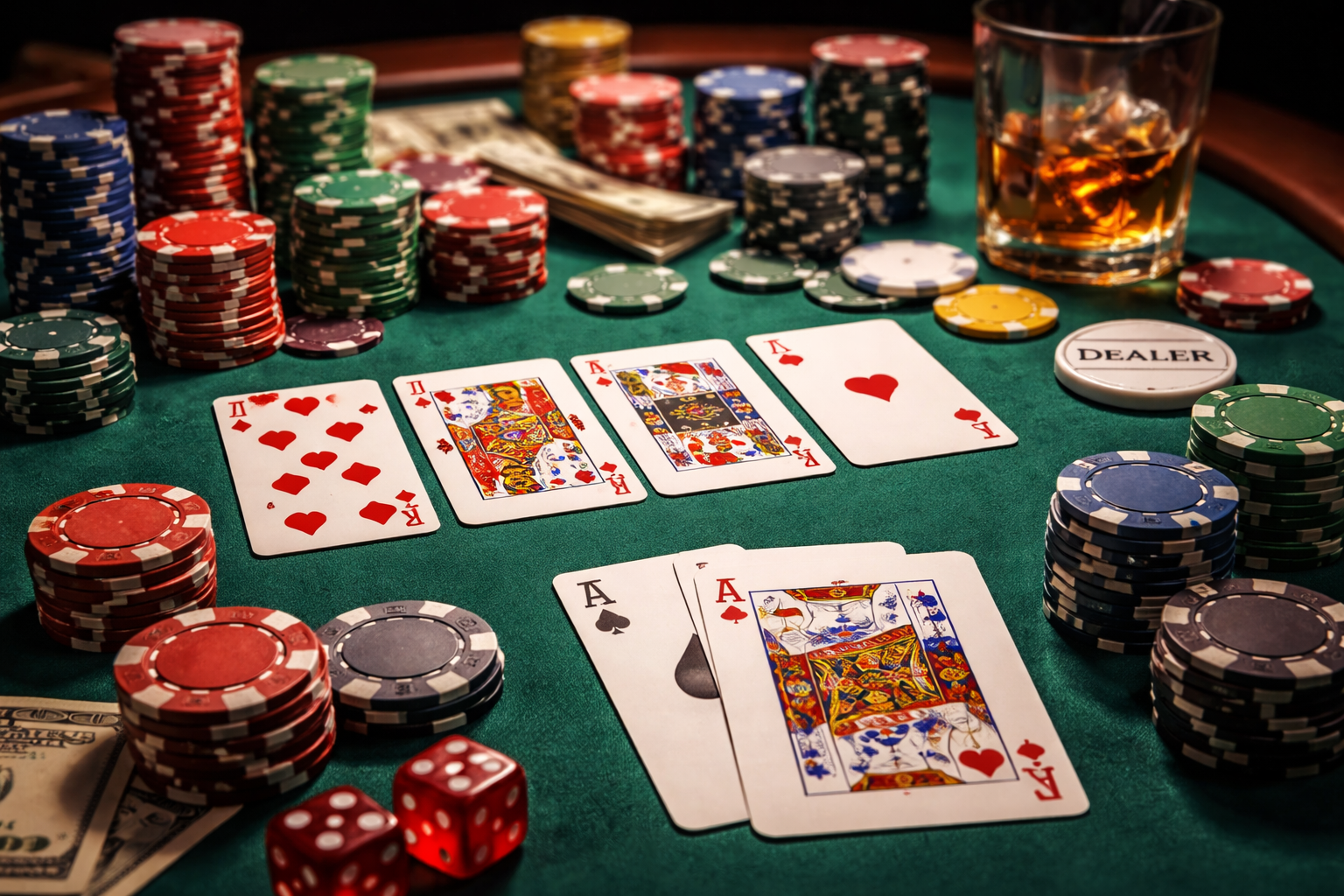













If you've ever sat at a casino table game and felt like the rules were written entirely in the house's favor, Ultimate Texas Hold'em is your chance to flip that script — at least partially. This game gives you real decisions that actually affect the outcome, unlike slots or roulette where luck is the only factor. With the right ultimate Texas Hold'em strategy chart in hand, you can trim the house edge down to around 2.19% — one of the lowest in any table game. Let's break down every decision point so you walk in prepared, not guessing.
Aggression at the start of a hand isn't just a style choice — it's mathematically correct. Most beginners check pre-flop out of caution, but that caution costs money over time. The pre-flop stage is the only moment where you can place a 4x raise, and missing that window means you're permanently capped at smaller bet sizes later.
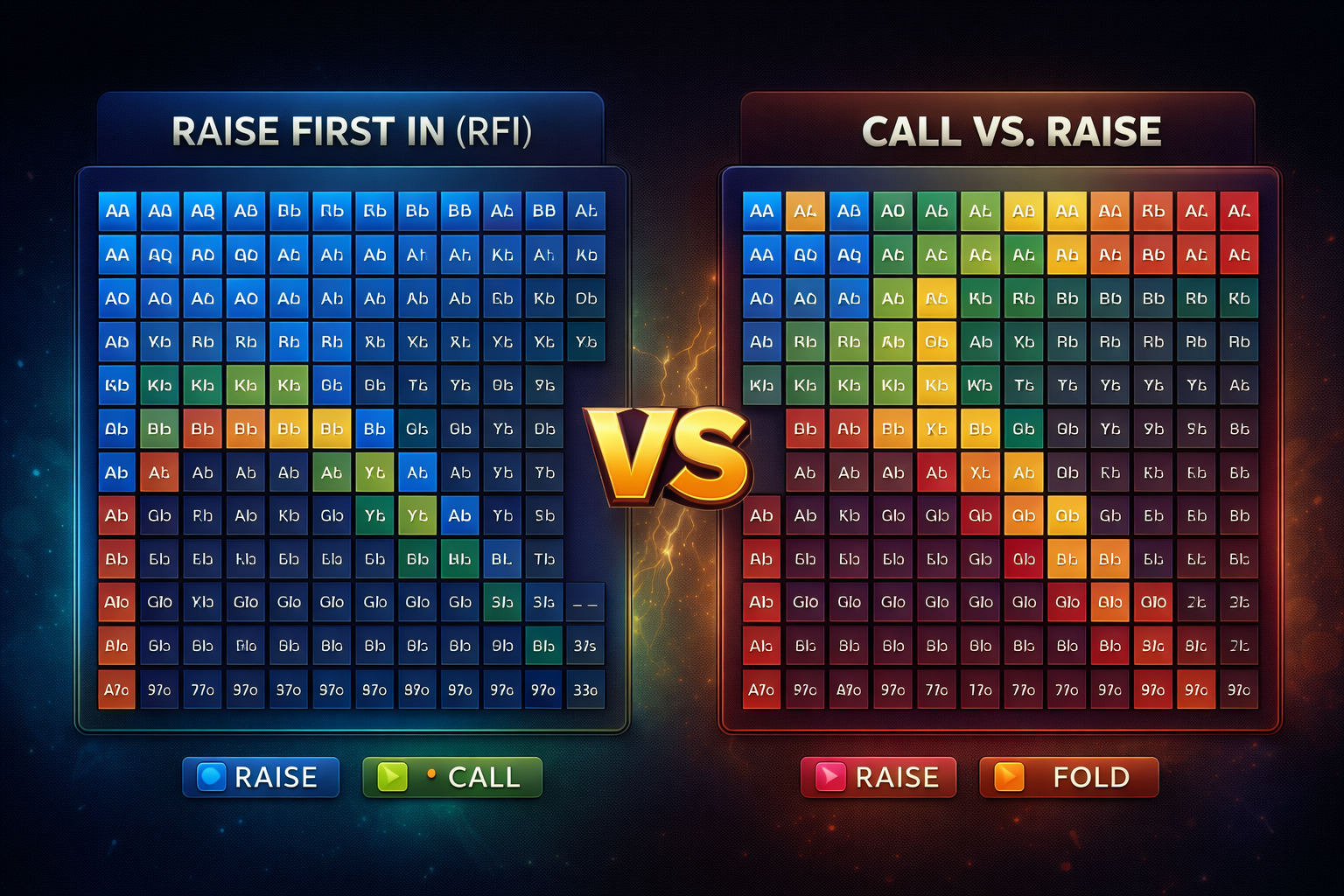
The expected value (EV) of a 4x raise with strong hole cards dramatically outperforms the check-and-wait approach. When you raise 4x pre-flop, you're locking in maximum action on a hand where you hold an edge before the community cards even land. Checking, by contrast, limits your future play bet to 2x or 1x — meaning you collect less on winning hands. The ultimate Texas Hold'em preflop strategy chart confirms this: with high-equity hands, every check is a quiet leak in your bankroll.
Not every hand deserves a 4x raise, but some hands absolutely demand it. Based on the ante and blind structure of the game, here are the hands where you should never hesitate:
These holdings give you strong hand strength before the flop and justify the full raise every single time.
Any pocket pair from 3-3 upward is an automatic 4x raise — no exceptions. Small pairs might seem weak, but in head-to-head poker format against the dealer, even a pair of threes gives you a statistically favorable position before the board develops. Sets (three of a kind) and full houses that develop from small pocket pairs are among the most profitable hands in UTH, and they all start with that early raise.
So you checked pre-flop — maybe you had 7-2 offsuit and there was nothing to do about it. The game isn't over. The flop gives you three community cards and a second chance to evaluate your play or fold decision. The key is to stay disciplined and not chase losses with bad math.
After the flop, you can place a 2x play bet if you have a strong enough reason to continue. Here's when you should bet 2x on the flop:
💡You paired one of the board cards with a hole card 💡 You have a flush draw (four cards to a flush) You have a hidden pair (pocket pair that didn't improve, but is still live)
The river is your last chance. At this point, the full board is out and your hand is complete. The 1x play bet at the river should only go in when you hold at least a pair, or when you're holding K-high or better and the dealer seems unlikely to qualify. Dealer qualification requires at least a pair of 4s, so a K-high board with no visible pair sometimes gives you a live shot at an ante push rather than a full loss.
Folding is not failure — it's smart bankroll management. If you've checked pre-flop and the flop, and the river leaves you with nothing (no pair, no draw that hit), fold without hesitation. Throwing a 1x play bet into a hand you can't win is one of the most common and costly mistakes at the UTH table. Use the ultimate Texas Hold'em basic strategy chart as a reference — it will tell you clearly when a hand is simply unplayable.
This rule catches a lot of players off guard. Even if you have a better hand than the dealer, your ante bet doesn't automatically win — the dealer needs to qualify first. This rule shapes optimal strategy in ways most casual players overlook.
Dealer qualification in UTH requires a minimum hand of a pair of 4s. If the dealer shows anything weaker — high-card hands, a pair of 2s or 3s — they don't qualify. When that happens, the dynamics of your payout change significantly, and knowing this affects how aggressively you should bet on borderline hands.
|
🃏 Situation |
💰 Ante result |
🎯 Blind result |
▶️ Play bet result |
|
✅ You win, dealer qualifies |
Win |
Win (if straight+) |
Win |
|
🔄 You win, dealer doesn't qualify |
Push |
Win (if straight+) |
Win |
|
❌ Dealer wins, dealer qualifies |
Lose |
Lose |
Lose |
|
⚠️ Tie |
Push |
Push |
Push |
Here's the nuance: if the dealer doesn't qualify and you have the better hand, your ante bet pushes — you don't win it, but you don't lose it either. Your play bet still wins, and your blind bet wins if your hand is a straight or better. This is why folding marginal hands before a qualifying dealer is sometimes a mistake — a non-qualifying dealer can save your ante even on a mediocre holding.
The table below covers the core decision framework across all three betting stages. Use the ultimate Texas Hold'em strategy chart as a quick reference when you're at the table.
|
🎴 Hand / situation |
🔼 Pre-flop action |
🔁 Flop action |
🏁 River action |
|
💎 Any Ace |
4x raise |
— |
— |
|
👑 K-5+ or Q-8+ |
4x raise |
— |
— |
|
🃏 Any pocket pair (3-3+) |
4x raise |
— |
— |
|
🔗 J-10 suited/offsuited |
4x raise |
— |
— |
|
📊 Pair on board with hole card |
Check |
2x bet |
— |
|
🎯 Flush draw on flop |
Check |
2x bet |
— |
|
🃏 K-high or better, no pair |
Check |
Check |
1x bet |
|
❌ No pair, no draw, weak hand |
Check |
Check |
Fold |
The trips side bet is one of the most visible features at the UTH table — and one of the most misunderstood. It pays out on three-of-a-kind or better, regardless of whether you beat the dealer. That independence makes it feel low-risk, but the math tells a different story.
The trips side bet offers attractive payouts — sometimes 3:1 for three of a kind, up to 50:1 for a royal flush depending on the casino paytable. However, the ultimate Texas Hold'em strategy chart house edge on this side bet is significantly higher than the main game, often sitting between 1.9% and 6.18% depending on which paytable version Shazam Casino runs. The core game with optimal strategy sits at 2.19% house edge — the trips bet frequently runs higher.
|
🎰 Hand |
💵 Typical payout |
|
👑 Royal Flush |
50:1 |
|
🌈 Straight Flush |
40:1 |
|
🎲 Four of a Kind |
30:1 |
|
🏠 Full House |
8:1 |
|
♠️ Flush |
7:1 |
|
➡️ Straight |
4:1 |
|
🃏 Three of a Kind |
3:1 |
The safest approach to the trips side bet is to treat it as an occasional luxury, not a core part of your session. If your session bankroll is $200, capping trips bets at $5 per hand keeps you in the game long enough for ultimate Texas Hold'em optimal strategy chart variance to smooth out. Chasing big payouts with oversized trips bets is how a solid UTH session turns into a 15-minute disaster. Protect the main game — the trips bet is a bonus, not a strategy.