











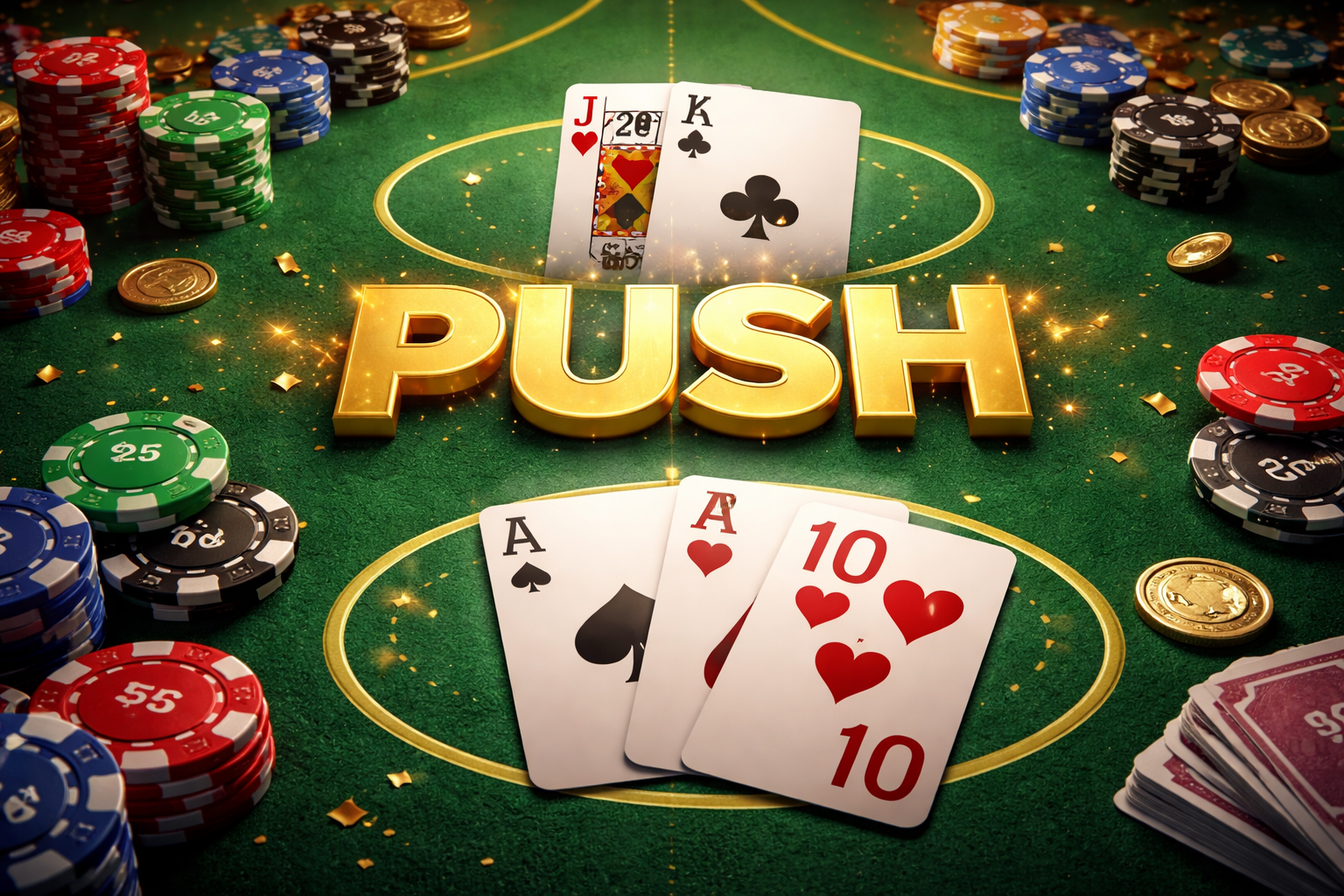













Every winning hand at the Blackjack table starts with one simple question: what is this card actually worth? Whether you're sitting down for your first real-money session or brushing up before hitting the online casino floor, understanding Blackjack card values is the foundation everything else builds on. This guide breaks down the exact point value of every rank, shows you how often each card appears, and reveals the dollar impact each one has on your expected results. Forget memorizing complicated charts—by the end of this page, you'll know precisely what are the card values in Blackjack and why they matter for your bankroll.
Learning card values in Blackjack doesn't require flashcards or hours of study. The entire system fits into four quick rules that you can memorize during a coffee break. Once these stick, every decision at the table becomes faster and more confident. Number cards from 2 through 9 are the easiest to remember because they equal their face value. A 2 of hearts is worth 2 points, a 7 of spades is worth 7 points, and so on. There's no trick here—just count the pips printed on the card and you've got your total. This straightforward logic covers nearly half the deck and removes any guesswork from low-card hands.
Ten-value cards form the largest group in the shoe. The 10, Jack, Queen, and King all count as exactly 10 points regardless of suit. Because four separate ranks share this value, roughly 30.8% of every fresh deck consists of tens. That percentage matters when you're deciding whether to hit or stand—more tens in the shoe means more chances for strong hands and dealer busts.
The Ace is the most flexible card in the Blackjack card values game. It can be counted as either 11 or 1, whichever benefits your hand. This dual nature is why the ace one or eleven rule exists, and it's also why roughly 52% of all natural Blackjacks include an Ace paired with a ten-value card. When your total exceeds 21 with an Ace counted as 11, the card automatically switches to 1, keeping you alive in the hand.
💡Think "2-9 = see it, say it" for number cards, "royalty = 10" for face cards, and "Ace = flexible friend" for the wild card of the deck.
Before you can estimate your Blackjack card values odds, you need to know how the deck is built. Every standard 52-card deck contains four copies of each rank—four Aces, four 2s, four 3s, and so on up through four Kings. That means each individual rank represents about 7.69% of the deck at shuffle time. Understanding this baseline helps you gauge when the remaining cards favor you or the house. The table below shows starting frequencies for a single deck. In multi-deck shoes (six or eight decks), multiply the card count accordingly, but the percentages stay identical.
|
Rank |
Cards per Deck |
Percentage of Deck |
Point Value |
|
2 |
4 |
7.69% |
2 |
|
3 |
4 |
7.69% |
3 |
|
4 |
4 |
7.69% |
4 |
|
5 |
4 |
7.69% |
5 |
|
6 |
4 |
7.69% |
6 |
|
7 |
4 |
7.69% |
7 |
|
8 |
4 |
7.69% |
8 |
|
9 |
4 |
7.69% |
9 |
|
10/J/Q/K |
16 |
30.77% |
10 |
|
Ace |
4 |
7.69% |
1 or 11 |
Ten-value cards dominate because four ranks share the same point value. This 30.77% concentration is the single most important number for anyone learning how to play Blackjack card values strategy. When you hear card counters talk about a “ten-rich shoe,” they mean the remaining deck has an above-average percentage of these high cards left, which typically benefits the player.
Use 7.7% as your mental anchor. If you're tracking cards informally, any rank appearing more or less often than expected signals a shift in the deck composition. Combine this awareness with basic strategy, and you'll make smarter hitting, standing, and doubling decisions without complex math. See all games and filter by category.
Expected Value (EV) tells you exactly how much a hand is worth in real dollars over thousands of deals. When the dealer shows a 6—the weakest up-card—your starting hands gain significant value because the dealer busts more often. The numbers below assume a $1 base bet and perfect basic strategy.
A natural Blackjack card values (Ace plus any 10-value card) pays 3:2 at most tables, giving you an EV of +$1.50 per dollar wagered. That's the best possible outcome and illustrates why protecting 3:2 payouts matters when choosing where to play. A hard 20 (two ten-value cards) follows at +$0.67, while a hard 19 sits at +$0.48. These strong totals almost always win, unless the dealer pulls 21.
Interestingly, a starting total of 11 also carries a +$0.67 EV against a dealer 6 when you double down. Doubling lets you place an additional bet and receive exactly one more card. Because so many tens remain in the deck, your odds of landing 21 are high, and the dealer's weak up-card increases their Blackjack card values bust probability. Try a free casino bonus to test the platform before depositing.
|
Your Hand |
EV vs Dealer 6 |
Optimal Play |
|
A-10 (BJ) |
+$1.50 |
Stand (auto-win) |
|
20 |
+$0.67 |
Stand |
|
19 |
+$0.48 |
Stand |
|
11 |
+$0.67 |
Double Down |
|
12 |
−$0.15 |
Stand |
💡Create a pocket-sized Blackjack point chart indexed by dealer up-card. Laminate it and keep it in your wallet—casinos allow strategy cards at the table in most US jurisdictions.
A soft hand contains an Ace counted as 11 without busting. This flexibility adds roughly 0.6 EV points compared to an equivalent hard total because you can take extra cards without risking elimination. Understanding soft hard total differences separates casual players from informed ones.
Consider Ace-6 (soft 17) against a dealer showing 5. Your EV here is +$0.24 whether you hit or double, depending on table rules. Compare that to a hard 17, where standing is mandatory and your EV drops because you can't improve. The Ace's ability to shrink from 11 to 1 lets you chase better totals risk-free.
Ace-5 (soft 16) against dealer 5 carries a +$0.12 EV when you hit. You're essentially getting a free look at the next card—if it's low, you improve; if it's high, your Ace adjusts and you stay in the game. Hard 16 against the same dealer card is far more dangerous because any 6 or higher busts you immediately.
Even marginal hands like Ace-2 (soft 13) against dealer 5 hover around −$0.02 EV. That's nearly break-even, which sounds bad until you realize a hard 13 in the same spot is significantly worse. The takeaway? Aces transform mediocre starting points into playable opportunities, and that extra flexibility translates directly into dollars saved over time.
Splitting pairs is one of the few moves that lets you turn defense into offense. When your first two cards match in rank, you can separate them into two independent hands, each receiving a new second card. Knowing when to split—and when to resist—can swing your session results dramatically. The classic example is 8-8 against a dealer 10. If you hit this hard 16, your EV is −$0.48 per dollar bet. Splitting transforms each 8 into a fresh starting point with EV of −$0.16 per hand, saving you $0.32 on every dollar wagered. That's a 32-cent improvement just for knowing the correct play. Over hundreds of hands, these savings compound into real money.
Ace-Ace against dealer 6 flips the script entirely. Splitting here yields +$0.60 EV per hand, while hitting the combined soft 12 only delivers +$0.19. You're essentially tripling your expected profit by separating the Aces and giving each one a chance to pair with a 10 for Blackjack. Never split 5s under any circumstances. A pair of 5s equals 10—an excellent doubling opportunity with +$0.34 EV against dealer 6. Splitting turns that strong start into two weak 5-based hands at −$0.12 EV each. You'd be throwing away nearly half a dollar in expected value per bet.
Quick Split Guide:
The dealer's visible card dictates your entire strategy. A weak up-card like 6 means the dealer must draw to a stiff total and frequently busts. A strong up-card like 10 puts pressure on you to improve because the dealer likely holds a pat hand.
When the dealer shows 6, their bust probability is roughly 42%. Your marginal hand of 12 carries only −$0.15 EV because standing lets the dealer self-destruct almost half the time. You're not trying to win outright—you're waiting for the house to lose.
When the dealer shows 10, their bust probability drops to about 23%. That same 12 now has −$0.54 EV, a full 0.39 units worse. The difference equals getting a $39 rebate on every $100 wagered when you face a 6 instead of a 10. This gap explains why card values Blackjack strategy changes so drastically based on what the dealer reveals. Spin popular online slots with different RTP and features.
|
Dealer Up-Card |
Bust Probability |
Your 12 EV |
Strategic Approach |
|
6 |
42% |
−$0.15 |
Stand, let dealer bust |
|
10 |
23% |
−$0.54 |
Hit, improve your hand |
|
Difference |
19% |
$0.39 |
Adjust play accordingly |
This is why experienced players mentally categorize dealer cards into two buckets: bust cards (2-6) and pat cards (7-A). Against bust cards, you stand on lower totals and let variance work in your favor. Against pat cards, you take more risks because passive play leads to slow losses.
Card counting converts Blackjack card values into actionable edge estimates. The most common system assigns tags: low cards (2-6) get +1, neutral cards (7-9) get 0, and high cards (10-A) get −1. As cards leave the shoe, the running count shifts, telling you whether the remaining deck favors player or house.
Removing a single 5 from the deck—tagged +1—increases your edge by approximately 0.67%. Fives are devastating for players because they help the dealer convert stiff hands into pat totals without busting. Every 5 that leaves the shoe is good news for your bankroll.
Removing a single 10—tagged −1—decreases your edge by about 0.51%. Tens help players more than dealers because they create Blackjacks, improve double-down outcomes, and increase dealer bust rates on stiff totals. Watching tens disappear means adjusting your bet size downward.
💡At true count +2, the basic strategy edge shifts close to break-even. Beyond +3, you're playing with a genuine mathematical advantage. This is where informed bet sizing pays off.
When the dealer shows an Ace, you're offered insurance—a side bet that pays 2:1 if the dealer's hole card is a 10. Sounds tempting, but the math rarely supports it. Understanding why requires knowing Blackjack rules card values percentages. At shuffle, 30.8% of the deck consists of tens. For insurance to break even, you need 33.3% tens remaining (one-third of unknown cards).
Fresh decks never meet this threshold, making insurance a losing proposition off the top. Only take insurance when the true count reaches +3 or higher. At that point, roughly 38% of remaining cards are tens, finally tipping the odds in your favor. Below that threshold, every dollar you insure costs you about 7.7 cents in expected value—a hidden tax on scared money. Review current casino bonuses to maximize your first sessions.
|
True Count |
Approximate 10s Remaining |
Insurance EV |
Action |
|
0 or below |
~30.8% |
−$0.077 |
❌ Decline |
|
+1 to +2 |
~32-34% |
−$0.03 to $0.00 |
❌ Decline |
|
+3 or higher |
~38%+ |
+$0.05+ |
✅ Accept |
Late surrender lets you forfeit half your bet before the dealer checks for Blackjack. It feels like quitting, but on specific hands, surrendering actually saves money compared to playing out a losing situation. Holding 16 against dealer 10 illustrates the concept perfectly. If you hit, your EV is −$0.54—you'll lose more than half your bet on average. Surrendering locks in exactly −$0.50, saving $0.04 per dollar wagered. That's a small edge, but over thousands of hands, those pennies become significant.
The 15 vs.10 scenario is even tighter. Hitting produces −$0.51 EV; surrendering costs −$0.50. You're saving just one cent per bet, but it's still the mathematically correct play. Anything that reduces losses without risking additional money deserves consideration.
At 14 vs 10, the equation flips. Hitting yields −$0.48 EV, which is better than the −$0.50 surrender cost. Here, you should take your chances with the deck rather than automatically giving up half. Knowing where these breakpoints fall separates disciplined players from those who surrender too often or not enough.
A physical strategy card eliminates guesswork at the table. Design yours with three color zones based on optimal action: green for always stand, yellow for double if allowed, and red for surrender options. This visual system lets you find correct plays in seconds without memorizing hundreds of hand combinations. Size your card to fit behind a credit card in your wallet. US casinos generally permit strategy cards at Blackjack tables, so there's no need to hide it. Having the reference visible actually speeds up the game and reduces errors that cost you money.
The face card worth 10 rule means your card only needs entries for totals, not specific card combinations. A hand of Queen-7 plays identically to 10-7 or King-7 because they all equal 17. This simplification keeps your reference card compact while covering every possible scenario. Create account and start exploring the games catalog.
💡 Print two cards—one for hard totals, one for soft totals and pairs. Clip them together with a small binder ring so you can flip between references quickly during live play.