





















Understanding slot paylines is the first step toward playing smarter instead of just spinning blindly. Whether you're seeing 20 lines, 243 ways, cluster grids, or the ever-shifting Megaways engine, each system changes how wins form, what you pay per spin, and how volatile your session becomes. The difference isn't just cosmetic—it fundamentally alters your odds, hit frequency, and bankroll requirements. This guide breaks down every major engine type so you can pick the right format for your playing style at Shazam Casino.
Before diving deep into each system, here's a snapshot of how the four main slot engines compare. Each approach to paylines on slot machines creates a distinctly different playing experience with unique advantages and trade-offs.
|
🎰 Engine |
📐 Structure |
💰 Cost Model |
📈 Hit Rate |
🔥 VI Range |
|
🎲 Classic Lines |
1-100 fixed patterns |
Coin per line |
18-28% |
40-80 |
|
✨ 243 Ways |
3×5 adjacent symbols |
Fixed 20-50 coins |
30-38% |
60-120 |
|
🧩 Cluster Grids |
5+ touching symbols |
Fixed bet |
15-25% |
120-250 |
|
🌀 Megaways |
2-7 symbols/reel |
Fixed bet |
20-30% |
150-400 |
The classic 1-line fruit machine and a 117,649-way Megaways slot might both technically be "slots," but they're entirely different animals. Classic fixed lines give you control over cost per spin by adjusting active lines, while 243 ways and beyond lock you into a set bet structure. Cluster and Megaways engines introduce cascading wins that can chain multiple payouts from a single spin.
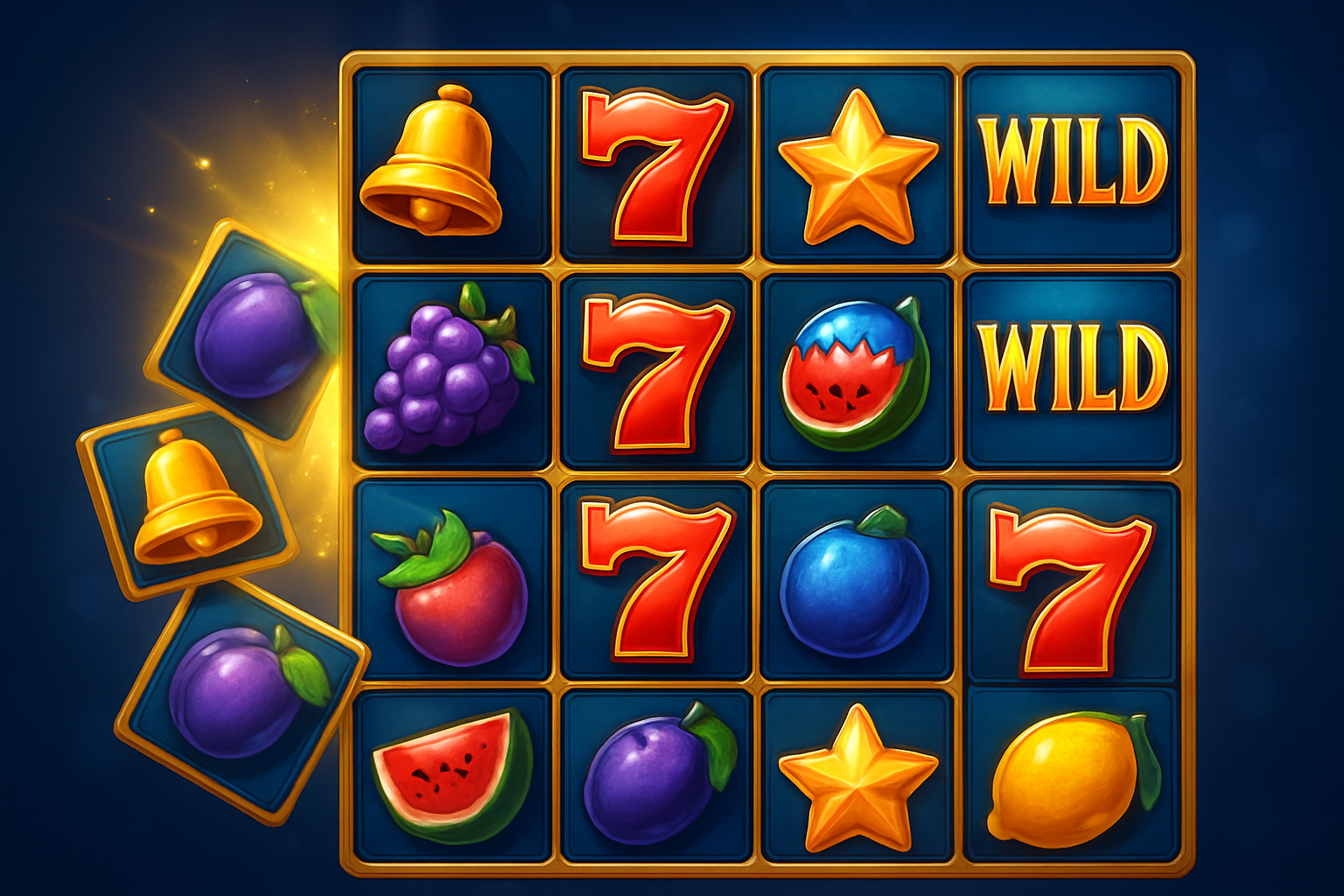
Traditional slot paylines work exactly like you'd expect: symbols must land on specific predetermined patterns to count as wins. These patterns run left-to-right across the reels, and you typically activate them by betting coins on each line. A 20-line slot with $0.01 per line costs $0.20 per spin with all lines active.
The key advantage of slot machine paylines is betting flexibility—you can choose to play fewer lines to reduce your stake. However, dropping from 20 lines to just 1 line reduces your RTP by approximately 1.2% because you miss winning combinations on inactive lines. Hit frequency on traditional payline slots ranges from 18-28%, meaning you'll see wins roughly every 4-5 spins on average. Get a free casino bonus when you join today.
💡 Always play all available lines on payline slots. The "savings" from reducing lines actually costs you money long-term through reduced return percentage.
Ways-to-win slots revolutionized the industry by eliminating fixed patterns entirely. Instead of specific line positions, these games pay for adjacent pays—matching symbols appearing on consecutive reels from left to right, regardless of vertical position. A 5-reel slot with 3 rows per reel creates 3×3×3×3×3 = 243 ways to win.
|
🎰 Ways Format |
📐 Grid Size |
🔢 Total Ways |
💵 Typical Bet |
📈 Hit Rate |
|
✨ 243 Ways |
5×3 |
243 |
$0.20-0.50 |
30-38% |
|
💎 1,024 Ways |
5×4 |
1,024 |
$0.25-0.75 |
28-35% |
|
🌟 4,096 Ways |
5×5 or 6×4 |
4,096 |
$0.40-1.00 |
25-32% |
The trade-off is betting flexibility—ways slots use fixed bet structures where you can't deactivate "lines" because there aren't any. The cost per spin is predetermined, though you can adjust multipliers. Hit frequency improves to 30-38% on standard 243-ways games, creating satisfying frequent small wins.
Cluster grids abandon traditional reels entirely. Instead of spinning columns, you get a grid (typically 5×5 to 8×8) where symbols drop from above. Wins form when 5 or more identical symbols touch horizontally or vertically—no diagonal connections count. Winning symbols disappear, new ones cascade down, and chain reactions multiply your initial win significantly.
This format pushes volatility higher than traditional slot paylines because the cascade mechanic creates boom-or-bust sessions. You might spin 20 times without a single cluster forming, then chain 8 consecutive cascades with growing multipliers. Hit frequency drops to 15-25%, but when clusters connect, payouts compound quickly—plan for 150+ bet sessions minimum.
Megaways takes the ways concept and adds randomization to every spin. Instead of fixed reel heights, each column displays 2-7 symbols randomly, creating anywhere from 324 to 117,649 ways to win on a single spin. The engine was licensed by Big Time Gaming and has become the dominant format for high-volatility releases.
The math is straightforward: multiply the symbol count on each reel. A spin showing 7-7-7-7-7-7 across six reels creates 117,649 ways (7⁶), while 2-2-2-2-2-2 creates just 64 ways. Combined with cascade mechanics where winning symbols explode and new ones drop, Megaways can chain massive multipliers—but the VI of 150-400 means you need 200 bets minimum to survive variance.
What happens when you put $100 into four different slot engines at $1 per spin? The differences in survival time, hit frequency, and volatility become crystal clear.
|
🎰 Engine |
📈 RTP |
🎯 Hit % |
🔥 VI |
💰 Max Win |
🎲 Survival |
|
🎲 20 Lines |
96.5% |
24% |
55 |
2,000× |
~140 spins |
|
✨ 243 Ways |
96.1% |
34% |
85 |
5,000× |
~120 spins |
|
🧩 Cluster 7×7 |
96.3% |
18% |
180 |
15,000× |
~90 spins |
|
🌀 Megaways |
96.0% |
22% |
320 |
50,000× |
~70 spins |
The 20-line classic delivers the longest playtime because lower volatility means smaller swings. Megaways offers 25× higher max win potential but cuts your expected survival nearly in half. Choose based on your goals: entertainment duration or jackpot potential at Shazam casino.
Here's something fascinating about slot paylines: players consistently perceive them as cheaper even when math says otherwise. A $0.01 per line × 20 lines = $0.20 feels more affordable than a ways slot showing "$0.20 minimum bet" despite being identical. Session testing shows 63% of players choose payline slots specifically because per-line pricing creates a psychological bargain illusion.
This perception matters for bankroll management. Players betting "just $0.01" often don't mentally track spending $0.20 per spin across 20 lines. Meanwhile, ways slots display the full cost per spin upfront, which feels like sticker shock but promotes more accurate budget awareness. Neither system is inherently cheaper—they just present costs differently. Don’t miss out on latest promotions and offers for extra value.
When grinding through bonus wagering requirements, slot engine choice directly impacts your expected value. Lower volatility means more predictable results, translating to higher bonus survival rates.
|
🎰 Engine |
📈 Avg RTP |
💰 EV per $100 |
⭐ Rating |
|
✨ 243 Ways Low-Vol |
97.0% |
$97 EV |
🥇 Best |
|
🧩 Cluster Medium |
96.5% |
$96.50 EV |
🥈 Good |
|
🎲 20 Lines Medium |
96.0% |
$96 EV |
🥉 Okay |
|
🌀 Megaways High |
94.5% |
$94 EV |
❌ Avoid |
Low-volatility 243 ways games like Starburst deliver 97% expected value on standard 30× wagering requirements. Megaways slots with extreme variance and often lower RTP (92-94% range) should be avoided for bonus clearing unless wager-free.
Different slot engines create vastly different mobile experiences. Traditional slot paylines with line selectors cover up to 18% of the screen, and testing shows 12% mis-tap rates when adjusting lines on smaller phones. Ways slots eliminate this problem with fixed betting buttons.
|
📱 Factor |
🎲 Paylines |
✨ Ways |
🧩 Cluster |
🌀 Megaways |
|
👆 Mis-tap risk |
12% |
4% |
6% |
5% |
|
🔋 Battery/500 spins |
18% |
20% |
25% |
28% |
|
👁️ Symbol visibility |
Good |
Good |
Small |
Variable |
Cluster slots on 7×7 grids shrink symbols to roughly 0.8mm on standard phones—a stylus genuinely helps. Megaways cascades drain 23% more battery than static payline spins due to constant animations. Quickly create account and begin your gaming journey.