






















Every Blackjack player eventually asks: how much is a queen Blackjack card actually worth? The answer seems obvious—ten points—but reality has layers that separate beginners from confident players. Face cards carry weight at the table, influencing splits, soft hands, and insurance decisions. Understanding exactly when your queen delivers maximum value will sharpen your game immediately. Create account and start exploring the games catalog.
The queen in Blackjack carries a fixed point value of ten in nearly every situation you'll encounter at American tables. Whether you're calculating a hard total, evaluating a soft hand, reading the dealer's up-card, or applying basic strategy charts, she contributes exactly ten points. This consistency makes her predictable and powerful, especially when paired with an ace for natural Blackjack.
Here's the critical distinction: the queen never becomes one point under any circumstance. She doesn't adapt when your total exceeds twenty-one. Instead, she forces the ace in your hand to flip from eleven down to one, creating a "soft" hand. For example, ace-queen-two totals thirteen (ace counts as one, queen stays ten, deuce adds two). The queen held firm while the ace absorbed the adjustment.
💡When someone asks how much is a queen worth in Blackjack, the honest answer is always ten—but the strategic answer involves understanding how she interacts with aces and splits.
Every standard fifty-two card deck contains exactly four queens, translating to 7.69 percent of the shoe at shuffle time. This percentage shifts slightly as cards leave the deck during play. Knowing this baseline helps you estimate remaining queen density when counting or guessing about dealer hole cards.
Casino Blackjack typically uses multiple decks to increase house edge. A six-deck shoe contains twenty-four queens, while an eight-deck game holds thirty-two. Ten-value cards collectively represent 30.8 percent of the entire shoe, with queens sharing equal probability with jacks and kings.
|
Shoe Size |
Total Queens |
Queen % |
Total 10-Values |
|
1 Deck 🎴 |
4 |
7.69% |
16 |
|
2 Decks 🎴 |
8 |
7.69% |
32 |
|
6 Decks 🎰 |
24 |
7.69% |
96 |
|
8 Decks 🎰 |
32 |
7.69% |
128 |
Whether playing Spanish 21 queen hands or standard Blackjack, queen percentage starts identical before Spanish 21 removes tens (but keeps face cards).
Expected value calculations reveal exactly how much money each queen combination generates over thousands of hands. The queen's fixed ten-point value creates specific scenarios where she dramatically improves or slightly hinders your position depending on dealer up-card.
Consider queen-six against dealer six—your total sits at sixteen. Standing produces EV of negative fifteen cents per dollar wagered, while hitting generates negative eighteen cents. Neither feels good, but standing loses less money, making it correct. Now examine queen-queen against dealer six. Standing on twenty yields positive sixty-seven cents EV. However, splitting creates two hands starting with ten each—combined EV reaches positive eighty-four cents versus sixty-seven for standing.
💡Knowing how much is a queen Blackjack hand worth requires examining specific matchups. Queen-five against dealer ten generates negative fifty-one cents EV when hitting—the queen alone doesn't rescue weak totals.
The most celebrated queen appearance happens alongside an ace, creating natural Blackjack that pays premium returns instantly. This two-card twenty-one beats dealer totals made with three or more cards. The queen value in Blackjack locks at ten during this pairing, combining with ace's eleven to produce twenty-one.
Standard payout runs three-to-two at legitimate tables—a ten-dollar wager returns fifteen dollars profit. The queen cannot count as one during these hands; she maintains her ten-point status regardless. When additional cards enter queen-ace hands, the ace converts from eleven to one automatically. Receiving ace-queen-two produces soft thirteen (one plus ten plus two), not twenty-three.
Case Study: A player held ace-queen and celebrated Blackjack before the dealer revealed a matching natural. She hit and received a three, making soft fourteen. Another hit brought seven for hard twenty-one. Throughout, the queen never changed from ten—only the ace shifted value. Explore rotating promotions and offers for extra value.
Pair splitting represents one of Blackjack's most valuable strategic tools. Holding queen-queen gives you twenty points—excellent. Standing against dealer six generates positive sixty-seven cents EV. Why split?
Mathematics favor splitting queens against dealer two through six when double-after-split (DAS) rules apply. Each resulting hand starts with ten points, positioning you for potential twenty or twenty-one totals. Against dealer six, each split hand carries positive forty-two cents EV—combined eighty-four cents versus sixty-seven for standing.
|
Dealer Card |
Stand EV |
Split EV (Each) |
Combined |
Play |
|
2 👆 |
+$0.64 |
+$0.39 |
+$0.78 |
Split ✅ |
|
3 👆 |
+$0.65 |
+$0.40 |
+$0.80 |
Split ✅ |
|
4 👆 |
+$0.66 |
+$0.41 |
+$0.82 |
Split ✅ |
|
5 👆 |
+$0.67 |
+$0.42 |
+$0.84 |
Split ✅ |
|
6 👆 |
+$0.67 |
+$0.42 |
+$0.84 |
Split ✅ |
|
7-A 🛑 |
Varies |
Lower |
Lower |
Stand ❌ |
Blackjack Switch rules modify this calculation slightly, but queen splitting fundamentals remain similar.
When the dealer shows a queen, strategic calculations shift toward defensive play. That exposed queen signals strength—the dealer starts with ten points visible. The hole card will be another ten-value approximately 30.8 percent of the time, meaning roughly one-third of hands begin with dealer twenty.
Dealer bust rates drop significantly when a queen shows. Only about twenty-three percent of hands starting with dealer queen result in bust, compared to forty-two percent with dealer six. Holding sixteen against dealer queen means hitting becomes mandatory (negative fifty-four cents EV for standing versus negative forty-eight for hitting).
💡When dealer shows ace with a queen potentially lurking, 30.8 percent ten-value probability falls below the 33.3 percent break-even point. Never insure unless counting cards and true count reaches plus three or higher.
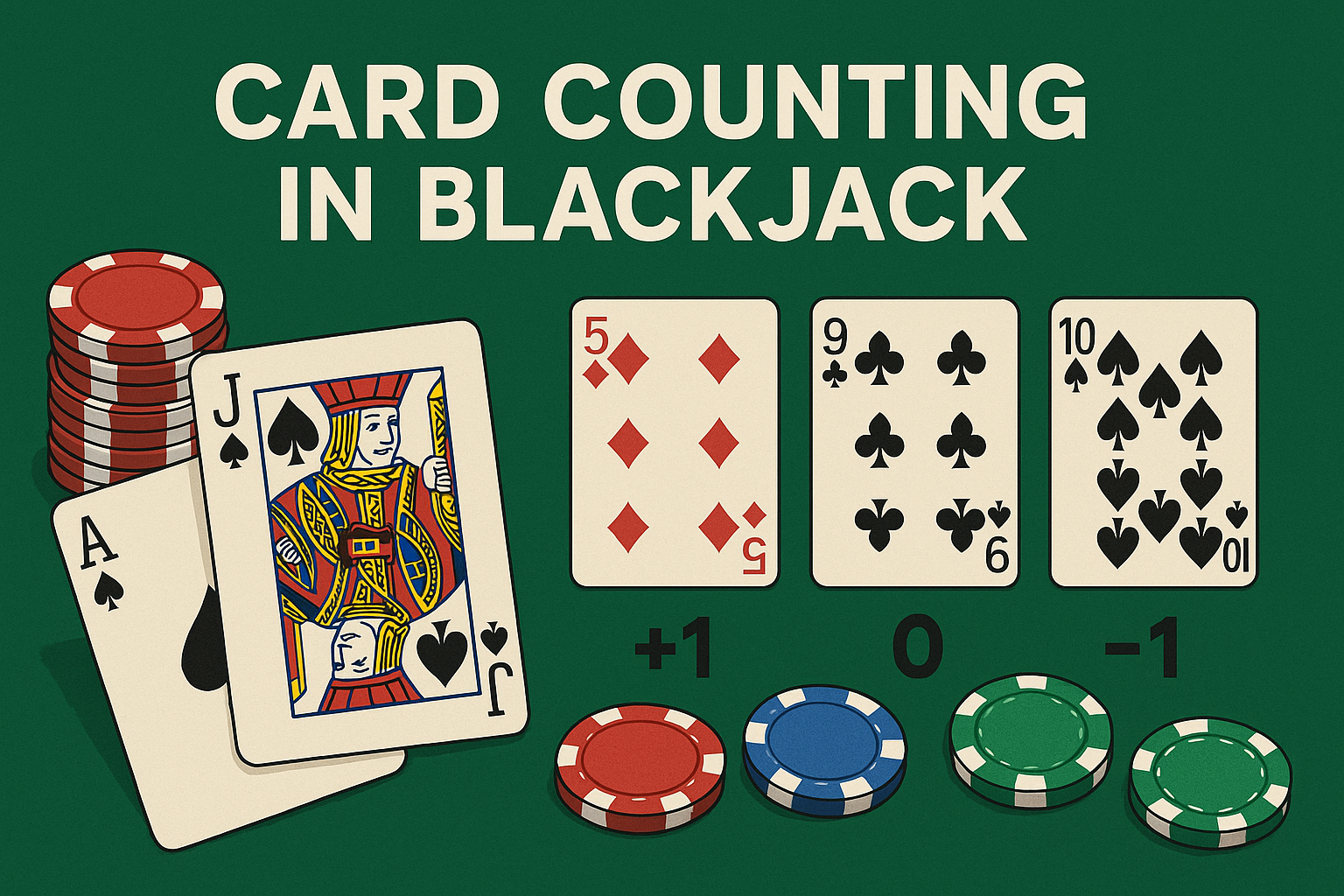
Card counting transforms how much is a queen Blackjack card worth from fixed value into dynamic indicator. Different counting systems assign different "tags" to face cards, allowing players to track whether the shoe favors house or player.
The Hi-Lo system tags all face cards as minus one. When a queen leaves the deck, subtract one from your running count. This reflects that removing high cards benefits the house. Each queen removed shifts house edge approximately 0.51 percent toward the online casino. Knock-Out counting uses zero for queens, eliminating true count conversion but sacrificing precision.
|
System |
Queen Tag |
Complexity |
True Count? |
|
Hi-Lo 🎯 |
−1 |
Beginner |
Yes |
|
K-O 🎯 |
0 |
Beginner |
No |
|
Hi-Opt I 📊 |
−1 |
Intermediate |
Yes |
|
Hi-Opt II 📊 |
−2 |
Advanced |
Yes |
|
Omega II 📊 |
−2 |
Advanced |
Yes |
Visual misidentification causes costly errors. Queens and aces share design elements creating confusion under casino conditions—dim lighting, table distance, or quick dealing can transform perception. Mistaking queen for ace changes your strategic approach entirely.
The common fake-out occurs when bent corners or glare obscures the card's lower portion. Players misidentify the queen's decorative elements as an ace's central pip, leading to standing on twelve against perceived dealer ace (should hit) or purchasing impossible insurance. Casino procedures require dealers to expose card corners vertically for clear identification.
Quick Visual Training: Queens display two lower curves in their portrait design; aces show a single central pip. Train yourself to identify this distinction in 0.2 seconds. The queen ten exception in Spanish 21—where tens are removed but queens remain—makes this skill critical. Play fast-paced video slots with bonus mechanics.
Payout rules determine how much is a queen Blackjack natural actually worth in dollars. Traditional three-to-two tables reward queen-ace generously, but six-to-five tables slash returns significantly.
At three-to-two tables, ten-dollar queen-ace natural returns fifteen dollars profit. Six-to-five tables pay only twelve dollars—three dollars vanished. This increases house edge by approximately 1.4 percent, transforming Blackjack into mediocre value.
Side bets offer additional wagering where queens create specific winning combinations. These optional wagers carry higher house edges but provide entertainment value. Understanding side bet value helps you decide whether extras fit your bankroll approach.
Perfect Pairs rewards matching initial cards. Queen-queen suited typically pays twenty-five to one, generating positive forty-two cents EV per dollar when hit—but overall house edge runs four to seven percent. Bonus 21 variants sometimes modify these payouts. Try a free casino bonus to test the platform before depositing.
|
Side Bet |
Queen Combo |
Payout |
EV When Hit |
|
Perfect Pairs 👑 |
Q-Q Suited |
25:1 |
+$0.42 |
|
Perfect Pairs 👑 |
Q-Q Colored |
12:1 |
+$0.20 |
|
Perfect Pairs 👑 |
Q-Q Mixed |
6:1 |
+$0.08 |
|
21+3 🃏 |
Q-Q-K Suited |
100:1 |
+$0.31 |
Quick reference material helps reinforce correct decisions until they become automatic. The essential one-liner covers ninety percent of scenarios: Queen equals ten, split versus dealer two through six, never take insurance, count as minus one in Hi-Lo.
Laminating this how much is a queen Blackjack reference protects against spills and extends usability. Color-code using green for favorable situations (splitting against weak dealers), yellow for neutral (standing on hard totals), and red for dangerous scenarios (hitting queen-six against dealer ten).
💡Practice with your chart at home before tableside use. Ten minutes with fifty simulated hands builds confidence for smooth casino play.